
Sub-Millisecond Battery Converter Gives 800 VDC AI Data Centers More Compute from the Same Grid Connection
FORT COLLINS, Colo., Nov. 11, 2026
Press Release Disclaimer: This is a press release distributed through the XPR Media network. It has not been independently verified by our newsroom.

Sub-Millisecond Battery Converter Gives 800 VDC AI Data Centers More Compute from the Same Grid Connection
PR Newswire
FORT COLLINS, Colo., Nov. 11, 2026
Rack-Mountable 80 kW Units Scale to Any Power Level and Let Battery Storage Absorb GPU Demand Swings
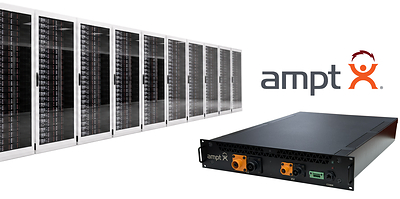
FORT COLLINS, Colo., Nov. 11, 2026 /PRNewswire/ — Ampt’s new Battery Converter helps AI data centers run more compute per megawatt of grid capacity as they transition to 800 VDC architectures. The converter delivers regulated 800 VDC from a DC bus shared by battery storage and grid or on-site power, providing active power conditioning that responds to GPU load changes in less than 1 millisecond. With the battery handling short peaks, GPUs can run without power capping and the grid connection can be sized for average load rather than peak load. Each 2U rack-mountable unit delivers 80 kW (100 A), and units can be paralleled from a single rack to a full row or an entire GPU cluster. The Battery Converter is currently in partner pilots for data centers, with general availability in Q3 2027.
Why Does Millisecond Response Matter?
Data centers are moving to 800 VDC power architectures for rack-scale AI systems, which are projected to support 1 MW IT racks and improve end-to-end power efficiency by up to 5% compared with 54 V systems, according to NVIDIA. AI workloads can swing a rack’s power draw between 30% and 100% within milliseconds. The grid needs a steady, predictable load, while the GPUs need a highly dynamic source. NVIDIA’s white paper says energy storage “needs to fill the gap between these two conflicting requirements.”
How Does the Battery Converter Work?
In Ampt’s design, the battery, the grid and any on-site generation all feed a common DC bus. The Battery Converter steps that bus down to a regulated 800 VDC supply for the GPU racks. When GPU load changes, the Ampt converter responds in less than 1 millisecond, enabling the battery to supply or absorb the difference while the grid or on-site generation sees steadier demand. Smoothing these peaks lets operators size upstream power equipment closer to average demand, reducing equipment costs, while presenting a steadier load that can help sites secure timely grid access.
The grid connects to the DC bus through a medium-voltage transformer and power conversion system, and feeds batteries that operate up to 1500 VDC. With a grid-forming power conversion system, the battery that absorbs GPU swings can also actively support grid voltage and frequency. These are the same transformers, power conversion systems and batteries used in utility-scale storage today, so data center operators can build on established supply chains and on the nearly two decades Ampt has spent deploying DC power conversion for utility-scale solar and energy storage systems.
How Does the Design Improve Efficiency?
In a power-limited AI factory, every kilowatt lost in conversion and distribution is capacity that cannot run GPUs, and operators pay for it twice, once as electricity and again as cooling. To keep more of that power for compute, Ampt’s design reduces losses in the converter, in storage and in distribution. The Ampt Battery Converter reaches up to 99.2% peak efficiency. Stored energy stays DC, avoiding the costly DC-to-AC-to-DC conversions of AC-coupled storage. And the DC bus feeding the converters runs at 1100 to 1500 VDC, depending on the battery’s state of charge, with the converters delivering a stable 800 VDC to the GPU racks. Higher voltage carries the same power at lower current, which reduces conductor losses or allows smaller conductors. Ampt’s Battery Converter is built for the first generation of 800 VDC racks while delivering the benefits of higher distribution voltages that appear only on future roadmaps.
How Does the Converter Scale?
Ampt Battery Converter units can be paralleled to any power level, allowing the same 2U, 80 kW (100 A) building block to serve a single GPU rack, a full row or an entire data hall. Adding one unit provides N+1 redundancy, maintaining full power if a unit goes offline. Sites with existing or planned solar can also connect PV systems to the same battery DC bus through Ampt String Optimizers, with no additional inverter or transformer.
“In AI factories, GPU loads swing in milliseconds, so storage has to work every minute of the day. With the Ampt Battery Converter, the same battery gives the grid a steady load and the GPUs the fast-responding power they need. For operators, that means reliable compute and a faster path to bringing new AI capacity online. For the communities around them, it means data centers that are easier on the grid,” said Aaron Gomolak, CEO of Ampt.
For specifications or to arrange a pilot, visit Ampt’s website or contact info@ampt.com.
About Ampt
Ampt delivers power conversion and communication technologies that are used to lower the cost and improve the performance of new PV systems, repower existing systems, enable lower-cost DC-coupled storage, and supply 800 VDC power to AI data centers. With installations and experience serving markets around the world, Ampt is the number one DC optimizer company for large-scale systems. The company is headquartered in Fort Collins, Colorado, U.S.A., and has sales and support locations in North America, Europe, Japan, and Australia as well as representation in Asia and the Middle East. For more information, visit www.ampt.com and follow Ampt on LinkedIn.
NVIDIA is a trademark and/or registered trademark of NVIDIA Corporation in the United States and other countries.

 View original content to download multimedia:https://www.prnewswire.com/news-releases/sub-millisecond-battery-converter-gives-800-vdc-ai-data-centers-more-compute-from-the-same-grid-connection-302935719.html
SOURCE Ampt



